


Carbohydrazide Deoxident
Carbohydrazide Deoxident, also known simply as carbohydrazide, is a chemical compound used primarily as an oxygen scavenger in various industrial applications.
Runxin was founded in 2002, is located in The City of Peony, Heze, Shandong PR, China, and covers 20,000 m2 of land. Since the year of 2002, Runxin has been ISO certified in 2005. We have almost 20 years of experience in bromine series biocides. We established good business relationships with Dow, Lanxess, Lozna, and Thor from 2004 to 2007, which continue today.
Why Choose Us
Advanced Equipment
We are specializing in the manufacturer industrial biocides and pharmaceutical intermediates, have a complete set of testing instruments. We own a large water treatment system and exhaust gas recovery system by ourselves, advanced waste treatment system is built.
Wide Range of Applications
Our products are widely used in the fields of water treatment, pulp and paper, cooling water systems, air washer systems, membrane systems for industrial water, metal working fluids containing water, oil field applications, paints, latex, antifoam emulsions, personal care, agricultural chemicals, ink and fountain solutions, adhesives, starch and pigment slurries and pharmaceutical intermediates.
Broad Market
Our products are exported to a wide range of areas including North America, South America, Europe, the Middle East, Southeast Asia, Japan, and Russia.
Customer-oriented Service
We are committed to providing excellent customer service. We listen to our customers' needs and deliver on our promises. In addition, full-time after-sales personnel provide services 24 hours a day. If any problems occur during the use of the products, users can contact us.

DBNPA (or 2,2-dibromo-3-nitrilopropionamide) is an organic compound widely used as an industrial biocide. It is a white to off-white solid crystalline powder at room temperature and is characterized by its high effectiveness in controlling microbial growth in aqueous systems. DBNPA is particularly effective against bacteria, fungi and algae, making it suitable for use in cooling water systems, paper mills, oilfield operations, metalworking fluids and other industrial processes where microbial contamination may lead to equipment corrosion, product spoilage or reduced process efficiency.

2,2-Dibromo-3-Nitrilopropionamide
2,2-Dibromo-3-nitrilopropionamide, also known as DBNPA, is an effective biocide widely used in the industry to control bacteria, fungi, and algae. While some may worry about the use of biocides in industrial applications, DBNPA has proven to be a safe and reliable solution.

DBNPA 20% is an effective antiseptic that helps us maintain cleanliness and hygiene in our daily lives. It is suitable for various occasions, such as swimming pools, water treatment systems and factories, etc. The benefits of using DBNPA 20% are obvious. It can effectively kill viruses and bacteria and prevent them from growing and multiplying in water bodies. This will help maintain water quality and make people safer and healthier.

Bronopol is a chemical substance that has attracted much attention recently. It is widely used in the fields of disinfection, sterilization, and antisepsis. Its mechanism of action is by damaging the cell membranes of microorganisms, thereby killing them.

DBNPA micro biocide refers to the use of 2,2-Dibromo-3-nitrilopropionamide specifically as an agent to kill or inhibit the growth of microorganisms in various industrial and commercial applications.

The appearance of DBNPA is a white or almost white powder. DBNPA is almost insoluble in water and needs to be dissolved by solvent before use. DBNPA is an environmentally friendly antimicrobial, the final decomposition products of DBNPA are CO2 and bromine ions.

Bronopol, also known as 2-Bromo-2-nitropropane-1,3-diol, is a highly effective antimicrobial agent used in various applications to control the growth of bacteria, fungi, and yeasts.

2-Octyl-2H-Isothiazol-3-one (OIT) is a low-toxicity biocide. It is specifically developed for the complete microbiological protection of water-based and solvent-based products against bacterial and fungal spoilage in the wet state.

Glutaraldehyde is a colorless glass-like crystal that is usually in a 2% to 50% water solution. It is used for cold sterilization of dental and medical equipment and as a preservative, biocide, hardener, and tanning agent.
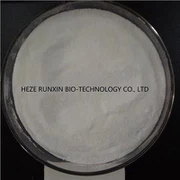
Carbohydrazide Deoxident, also known simply as carbohydrazide, is a chemical compound used primarily as an oxygen scavenger in various industrial applications. It is particularly effective in water treatment processes to remove dissolved oxygen, which can cause corrosion in boiler systems and other water-utilizing equipment. Carbohydrazide is a white crystalline substance with the chemical formula CH₆N₄O. It acts by reacting with oxygen to form water and nitrogen, thus reducing the oxygen content and minimizing corrosion. This makes it an essential component in industries such as power generation, oil refining, and water treatment plants (RunxinChem).
Melting point: 150-153 °C (lit.)
Boiling point: 167.26°C (rough estimate)
Storage temp: Keep in a dark place, Inert atmosphere,2-8°C
Stability: Stable, but may explode if heated. Incompatible with strong acids, and strong oxidizing agents.
InChIKey: XEVRDFDBXJMZFG-UHFFFAOYSA-N
Solubility: DMSO (Slightly), Water (Slightly)
Vapor pressure: 0Pa at 25℃
Water Solubility: Soluble in water.
Refractive index: 1.4164 (estimate)
Density: 1.02
Form : Crystalline Powder
PKA: 11.81±0.20(Predicted)
Merck: 14,1804
Color: White
BRN: 1747069
LogP: 2.94 at 21.6℃
Applications of Carbohydrazide Deoxident
Boiler Water Treatment: Dissolved oxygen in boiler water can lead to corrosion of boiler tubes, affecting the efficiency and lifespan of the boiler. Carbohydrazide is used to scavenge oxygen, thereby preventing corrosion and extending the life of the boiler system.
Cooling Tower Water Treatment: In cooling towers, oxygen can cause corrosion and the formation of biological slime. Carbohydrazide is used as an oxygen scavenger to reduce the oxygen levels in the recirculating water, which helps to minimize the growth of microorganisms and the risk of corrosion.
Closed-Loop Systems: Carbohydrazide is also used in closed-loop systems, such as those found in heating, ventilation, and air conditioning (HVAC) systems, to prevent oxygen-related corrosion in metal components.
Pharmaceutical and Cosmetic Industries: In the pharmaceutical and cosmetic industries, carbohydrazide can be used as an oxygen scavenger in products that are sensitive to oxidation, such as certain medications and cosmetic formulations.
Food Industry: Carbohydrazide is used in the food industry to prevent oxidation of food products, which can lead to spoilage and loss of quality.
Chemical Synthesis: In chemical processes where oxygen needs to be removed to prevent unwanted reactions, carbohydrazide can serve as an oxygen scavenger to ensure the desired reaction proceeds without interference.
Water Treatment for Power Plants: In power plants, especially those with steam generators, carbohydrazide can be used to reduce oxygen levels in the feedwater, protecting the equipment from corrosion and improving overall plant efficiency.
Functions of Carbohydrazide
Corrosion inhibitor: Carbonyl hydrazide can be used as a corrosion inhibitor on the metal surface, forming a protective film layer to reduce metal corrosion and oxidation.
Cross-linking agent: Carbohydrazide can be used as a cross-linking agent for polymers to improve the strength, heat resistance and chemical resistance of polymer materials.
Bacteriostatic agent: Carbohydrazide has a certain effect on inhibiting the growth of microorganisms and is often used to prevent the growth and reproduction of microorganisms in water treatment, papermaking, paint and other industries.
Explosive inhibitor: Because carbohydrazide inhibits the decomposition of peroxide, it can be used as an inhibitor for explosives and plays an important role in rocket fuel, explosives and other fields.
Decolorizing agent: Carbohydrazide can be used as a decolorizing agent for dyes and pigments to remove certain organic impurities and make their colors purer.
Chemical intermediates: Carbohydrazide can be used as an intermediate in the synthesis of other compounds and is widely used in the fields of drugs, dyes, pesticides and other fields.
Common Boiler Feed Water Treatment Issues and Solutions

An increase in sludge
If a boiler is seeing higher-than-normal amounts of sludge (sediment of solids or oil that are usually softer than scale but can get hard and scale after being "baked" onto the heat exchangers), there could be an issue with filtration.
How to avoid it?
The best way to combat sludge in a boiler is to eliminate any sludge-causing contaminants before they become an issue in addition to blowing out any sludge accumulations before they have a chance to bake onto high-heat surfaces, where they are extremely difficult to remove.
Scale buildup
Scaling is a deposit formed on the inside of piping and heat transfer surfaces when the water is heated and impurities precipitate or settle out leaving behind extremely hard deposits.
How to avoid it?
The level of scaling on a boiler will be determined by the amount of these impurities in relation to the pressure a boiler is run at. For example, many higher-pressure boilers will require a higher quality of water with fewer contaminants than some lower-pressure boilers. Boilers that generate steam to power turbines, for example, require high-pressure boilers and therefore more complex feed water treatment system to remove as many impurities as possible.
System corrosion
Corrosion in boilers, or the breakdown of the metal elements of the device, can happen for a variety of reasons. The most common reason is the presence of dissolved oxygen and carbon dioxide, which eat away at areas of the boiler causing system stress and cracking. The higher the boiler pressures, the more severe the corrosion. When chlorides are present at an unacceptable level, chloride stress cracking can also occur.
How to avoid it?
High-quality oxygen scavengers can be effective in removing these dissolved gases from boiler feed water in addition to deaerators. These two methods are widely used in the removal of the harmful gases that can break down and wreak havoc on boiler tubing and equipment. Managing the internal chemistry within proper pH levels along with an overall internal chemistry program is also critical.
Foaming and Priming
Foaming and priming in a boiler occurs when there are high amounts of dissolved solids present at the water surface. When the steam is generated, these impurities bubble up (foaming) and evaporate with the steam (priming), latching on to superheaters and turbines, decreasing their efficiency. Foaming is the production of persistent foam or bubbles in boilers, which do not break easily. Foaming is due to presence of substances like oils (which greatly reduce the surface tension of water).
How to avoid it?
The best way to avoid foaming and priming is to maintain a low level of dissolved solids and control alkalinity in your boiler. Membrane filtration, ion exchange, and softening can be helpful, as well as making sure pH remains between 8.5 and 9.5.
Storage Tips for Carbohydrazide Deoxident
Existence time
Existence and release within the period of time, during which period of withdrawal and elimination of absorption ability, and the effect of the period of time when no law arises.
01
Survival temperature
The temperature that can be removed is generally not higher than 40℃, and the effect of its absorption is on the other hand.
02
Existence environment
Existing in a dry, closed, cool environment, avoiding the tide and direct sunlight.
03
Packaging materials
There is no difference in the packaging material, which has no effect on its absorption.
04
Quantity used
Depending on the size of the packaging material, the quantity may be different depending on the selection, or the use may be more or less.
05
FAQ
Q: What is carbohydrazide used for?
Q: How does carbohydrazide react with oxygen?
Q: What is the difference between hydrazine and carbohydrazide?
Q: What is the carbohydrazide reaction in a boiler?
Q: What is the formula for carbohydrazide?
Q: How to use carbohydrazide deoxident?
Q: How to store carbohydrazide?
Q: What is the principle of carbonyl hydrazide oxygen removal?
The oxygen removal advantages of carbonyl hydrazide include low toxicity, high melting point, safe use and environmental protection. However, it is generally used as auxiliary thermal deaeration and is more expensive. These properties make carbonyl hydrazide widely used in industrial fields, not only limited to water treatment and metal protection, but also as an intermediate in the production of energetic materials, a cross-linking agent for elastic fibers in the chemical fiber industry, and as a pigment for carotene and red leaf pigments. Antioxidants.
Q: Is carbohydrazide volatile?
Q: Is carbohydrazide toxic?
Q: What is the composition of carbohydrazide?
Hot Tags: carbohydrazide deoxident, China carbohydrazide deoxident suppliers, manufacturers, factory, CARBOHYDRAZIDE Deoxident, DBNPA, 7753 60 8, Water Treatment Chemicals


Send Inquiry
