


Glutaraldehyde Biocide
As a glutaraldehyde biocide, it is used to eliminate harmful microorganisms on surgical instruments and has other uses as a fixative or preservative in other parts of a healthcare facility.however, it can get into the air from its use as a disinfectant, potentially exposing employees and patients to the chemical.
Runxin was found in 2002, is located in The City of Peony, Heze, Shandong PR, China, covers 20,000 m2 land. We are specializing in the manufacturer industrial biocides and pharmaceutical intermediates, have a complete set of testing instruments. We own large water treatment system and exhaust gas recovery system by ourselves, advanced waste treatment system is building..ince the year of 2002, Runxin got ISO cert in 2005. We have almost 20 years experience in bromine series biocides. We established good business relationship with Dow, Lanxess, Lozna, Thor from 2004 to 2007, which continues today.
Why Choose Us
Factory Strength
Runxin was found in 2002, is located in The City of Peony, Heze, Shandong PR, China, covers 20,000 m2 land. We are specializing in the manufacturer industrial biocides and pharmaceutical intermediates, have a complete set of testing instruments. We own large water treatment system and exhaust gas recovery system by ourselves, advanced waste treatment system is building.
Our certifications
Since the year of 2002, Runxin got ISO cert in 2005.
Our Product
DBNPA, BRONOPOL, CMIT/MIT, BIT, Carbohydrazide, DBNE, Nabr, TCMTB, PHMG, S-triazine, IPBC, DMDMH, MBT, Benzethonium Chloride, 5-bromo-5-nitro-1, 3-dioxane, Cyanoacetamide.
Rich experience
We have almost 20 years experience in bromine series biocides. We established good business relationship with Dow, Lanxess, Lozna, Thor from 2004 to 2007, which continues today.

Industrial grade DBNPA is a highly effective biocide that is widely used in various industrial applications. It offers excellent microbial control properties that make it an ideal choice for cleaning and sanitation purposes. DBNPA is a chlorine-free biocide, which is why it is preferred over...
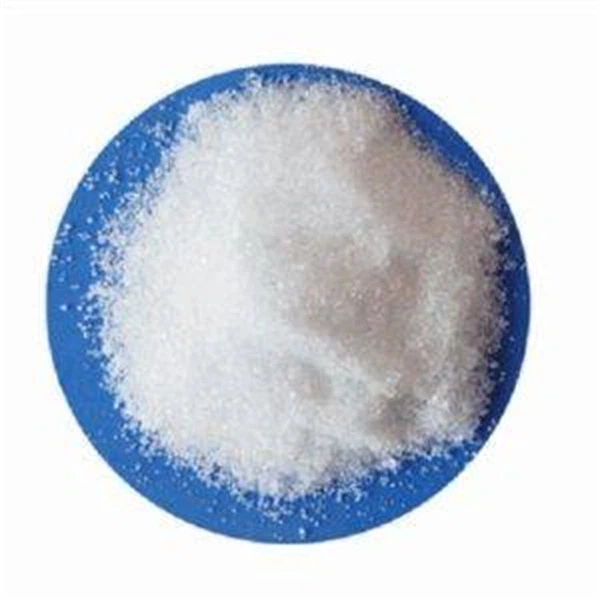
2,2-Dibromo-3-nitrilopropionamide
2,2-Dibromo-3-nitrilopropionamide, also known as DBNPA, is an effective biocide widely used in the industry to control bacteria, fungi, and algae. While some may worry about the use of biocides in industrial applications, DBNPA has proven to be a safe and reliable solution. DBNPA is a highly...

Chemical Name: 2.2-Dibromo-3-Nitrilopropion Amide
Product Name: DBNPA
CAS No.: 10222-01-2
Molecular Formula: C3H2N2OBr2

Bronopol is a chemical substance that has attracted much attention recently. It is widely used in the fields of disinfection, sterilization and antisepsis. Its mechanism of action is by damaging the cell membranes of microorganisms, thereby killing them. Although Bronopol is widely used in...

DBNPA is a highly efficient disinfectant and is widely used in many fields. It can quickly and completely eliminate a variety of bacteria and microorganisms to ensure hygienic quality. Due to its powerful bactericidal effect and safety and reliability, DBNPA is widely used in the field of...

DBNPA 20% is an effective antiseptic that helps us maintain cleanliness and hygiene in our daily lives. It is suitable for various occasions, such as swimming pools, water treatment systems and factories, etc.

Chemical Name: 2.2-Dibromo-3-Nitrilopropionamide
Common Name: DBNPA
CAS No.: 10222-01-2
Molecular Formula: C3H2N2OBr2

1. DBNPA assay is 95% min, water o.5% min, white tablet, PH5-7.
2. Two specifications, 20g/tablet and 100g/tablet.
3. Tablet has long acting and sustained release.

The appearance of DBNPA is white or almost white powder. DBNPA is almost insoluble in water, need to be dissolved by solvent before use. DBNPA is environmental friendly antimicrobial, the final decomposition products of DBNPA are CO2 and bromine ion.
As a glutaraldehyde biocide, it is used to eliminate harmful microorganisms on surgical instruments and has other uses as a fixative or preservative in other parts of a healthcare facility.however, it can get into the air from its use as a disinfectant, potentially exposing employees and patients to the chemical. Prolonged exposure to employees can become a problem.at cht, we provide solutions to maintain the health of your employees with environmental monitoring to ensure their well-being. We understand it's crucial to keep your employees safe and your healthcare facility compliant.This article covers the health implications and ways to ensure chemical safety while handling glutaraldehyde in the workplace.
Benefits of Glutaraldehyde Biocide
1. Inhibits microbial growth in enhanced oil recovery systems, industrial recirculating cooling waters, and non-food contact paper manufacturing. A broad-spectrum biocide against a range of bacteria, especially sulfate reducing bacteria (SRB), and algae.
2. Glutaraldehyde biocide is Miscible in all proportions with every type of water, including seawater and brine solutions and can be readily deactivated under controlled conditions. It contains No organic solvents in a completely aqueous formulation and demonstrates outstanding chemical stability and good compatibility with most water treatment chemicals.
3. Biocides can be used to control sulfate-reducing bacteria, slime-forming bacteria, iron-oxidizing bacteria and bacteria that attacks polymers in fracture and secondary recovery fluids.used in unconventional oil and gas (UOG) practices, such as hydraulic fracturing, control microbial growth. Unwanted microbial growth can cause gas souring, pipeline clogging, and microbial-induced corrosion of equipment and transportation pipes. However, optimizing biocide use has not been a priority.
4. Biocide for controlling the growth of sulphate reducing bacteria and other oilfield related microorganism in both fresh and saline waters.
Application of Glutaraldehyde Biocide
Bactericide and fungicide
Glutaraldehyde biocide is a quick-acting and broad-spectrum chemical bactericide. It can not only kill most bacteria, fungi, spores and viruses quickly and efficiently, but also does not corrode metal instruments, glass and plastic utensils. The toxicity is very low, so it is widely used in the disinfection and sterilization of medical equipment, food utensils, poultry, aquafarm and environmental sanitation. There are three milestones in the development history of chemical disinfectants. The first is formaldehyde at the beginning of this century. The second is ethylene oxide in the 1930s, and the third is glutaraldehyde biocide after the 1960s.
Leather tanning agent
In the tanning industry, glutaraldehyde biocide is an excellent tanning agent. The traditional tanning industry uses 50% potassium dichromate solution as the tanning agent, which is likely to cause the pollution problem of chromium-containing wastewater. Glutaraldehyde, as a tanning agent, can not only avoid such problems, but also make the product plump and soft with heat resistance, sweat resistance, soap resistance and other properties. Another feature of glutaraldehyde biocide as a tanning agent is that it can interact with various proportion of mineral tanning agent, pickling agent, neutral salt compatible, has good performance in a wide pH range.
Oil exploitation fungicide
Oilfield water injection is a measure to increase crude oil production widely adopted by countries all over the world. By injecting surface water into the oil field, it can supplement the energy loss of the oil layer caused by oil discharge, maintain or restore the pressure of the oil field and increase the oil recovery rate. However, the temperature and the environmental conditions in the water injection process are suitable for the growth and reproduction of various types of bacteria, including aerobic bacteria and anaerobic bacteria. Glutaraldehyde biocide is a non-ionic broad-spectrum bactericide, and it can tolerate salt and hard water. It can be used in combination with other agents.
Cooling water treatment bactericide
The growth and reproduction of microorganisms in industrial cooling water will form slime in the water treatment system. They adhere to the pipe wall of the water cooler, affect the heat transfer effect on the water side and reduce the heat exchange efficiency. Since the 1980s, there has been an increasing number of factories using glutaraldehyde biocide as a biocide in cooling water.
1. In water solution, Glutaraldehyde doesn't exist much in free state; instead, Glutaraldehyde makes appearance as hydrates with different forms, and most of them are hydrates with annular structure.
2. Glutaraldehyde is reactive in property, and liable to polymerize and oxidize, which will react with compounds containing active oxygen and nitrogen. The reaction of the product with protein is mainly carried out between the carbonyl group of the former and the amino group of the latter. Among the known aldehydes, the product is one of the best cross-linking agents for proteins.
3. Glutaraldehyde has a small influence on the activity of enzyme, and most of enzymes can be fixed under controlled condition, to cross-link without losing their activity. Contributing to its outstanding characteristics, the product has drawn special concern from people and been put at broad application.

Process of Glutaraldehyde Biocide
Production
Glutaraldehyde is produced industrially by the catalytic oxidation of cyclopentene by hydrogen peroxide, which can be achieved in the presence of various tungstic acid-based heteropoly acid catalysts.[23]This reaction essentially mimics ozonolysis. Alternatively it can be made by the Diels-Alder reaction of acrolein and vinyl ethers followed by hydrolysis.
Reactions
Like other dialdehydes, (e.g., glyoxal) and simple aldehydes (e.g., formaldehyde), glutaraldehyde hydrates in aqueous solution, forming gem-diols. These diols in turn equilibrate with cyclic hemiacetal.Monomeric glutaraldehyde polymerizes by aldol condensation and Michael reactions yielding alpha, beta-unsaturated poly-glutaraldehyde and related oligomers. This reaction occurs at alkaline pH values.
1. The glutaraldehyde biocide is preferably stored at an acidic pH of 3 to 5, and a stabilizer can also be added.
2. The glutaraldehyde biocide is stable under normal storage conditions. If the water in the aqueous solution of glutaraldehyde evaporates, the residual material will rapidly polymerize through a harmless chemical reaction and produce a flammable residue.
3. If a concentrated biocide of glutaraldehyde is contaminated with strongly acidic or basic impurities, it will undergo an aldol condensation reaction and cause exothermic polymerization of the glutaraldehyde in the solution. When this occurs, it is recommended that sufficient water be added to dilute the solution.
4. Glutaraldehyde biocide is easy to self-aggregate, and the higher the temperature, the more intense the aggregation. If the temperature is too high, it may explode, so it should be stored at a low temperature. Glutaraldehyde is stored at 2-8 ° C, preferably filled with argon.
Our Factory

FAQ
Hot Tags: glutaraldehyde biocide, China glutaraldehyde biocide suppliers, manufacturers, factory, 1 5 Dioxo 7a methyl 3aa hexahydroindane 4a propionic Acid, 2 Methyl 4 Isothiazolin 3 One Biocide, Glutaraldehyde Biocide, 4 4 19, 16alpha Methyl Epoxide 8DM, antimicrobial liquids




Send Inquiry
